
Wright County Arrest Records and Court Charges
An arrest record is created on the law-enforcement side. It may include the arresting or holding agency, jail booking information, inmate number, charge text, statute number, and custody status. A court charge record is created when the prosecutor files the charge in Wright County District Court. That filing is what turns a booking event into a court case.
The two records can differ. A jail report can list suspected or held-for charges before a final complaint is filed. The court record shows what was formally charged, amended, dismissed, resolved by plea, tried, or sentenced. If the booking side is what matters, use Wright County Inmate Records. If the full case file matters, use Wright County Criminal Court Records.
Source: Minnesota BCA Public Criminal History Search.
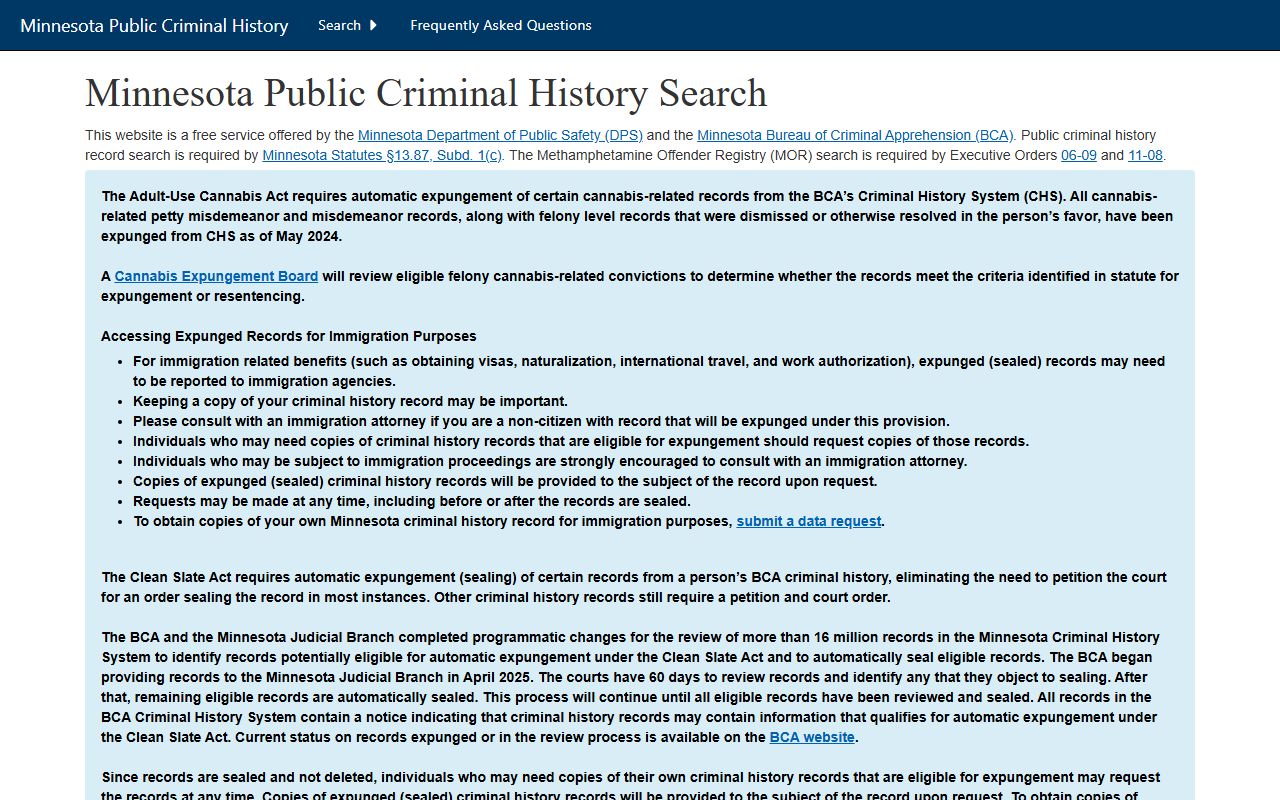
The BCA search is a useful statewide check when a Wright County arrest record needs to be compared with criminal-history data.
How to Find Arrest Records and Charges
Start with the jail roster or sheriff report if the booking event is the question. Use MCRO Case Search if the filed charge or case number is the question. For state-level context, the Minnesota Department of Corrections also has a public search page for people under DOC jurisdiction and a separate individual-and-fugitive search page. Those systems are separate from the Wright County court file.
That split matters because the same person may appear in more than one system. A jail booking, a filed complaint, and a DOC search result do not all mean the same thing. The court charge record is the most direct path when the reader wants the prosecutor’s filing.
- Use the jail roster or sheriff report first if the booking event is the question.
- Use MCRO Case Search if the filed charge or case number is the question.
- Search by name, case number, citation number, or other known detail.
- Open the result and read the charge text, status, and court events.
- Use the state criminal-history or DOC lookup only as a separate cross-check.
Source: Minnesota DOC individual and fugitive search.
The DOC search is a separate statewide lookup and should not be confused with the Wright County court charge record.
How Charges Get Filed After an Arrest
After an arrest, the prosecutor decides what gets filed in court. In Minnesota that can happen through a complaint, an information, or an indictment. The filing document is the legal start of the charge record. It names the offense, the statute, and the level of the charge. From there the file can grow through hearings, amendments, dismissals, and plea changes.
| Complaint | Information | Indictment | |
|---|---|---|---|
| Filed By | Prosecutor, often with law-enforcement support | Prosecutor | Grand jury |
| Common For | Many misdemeanor and felony filings | Many felony cases | Serious felony cases |
| Starts | The criminal case in district court | The criminal case in district court | The criminal case in district court |
Wright County arrest reports are useful context because they can show the arrest before the court filing appears. The charge record is still the part that matters for court status, plea changes, and final outcome.
Source: Wright County Sheriff arrest report.
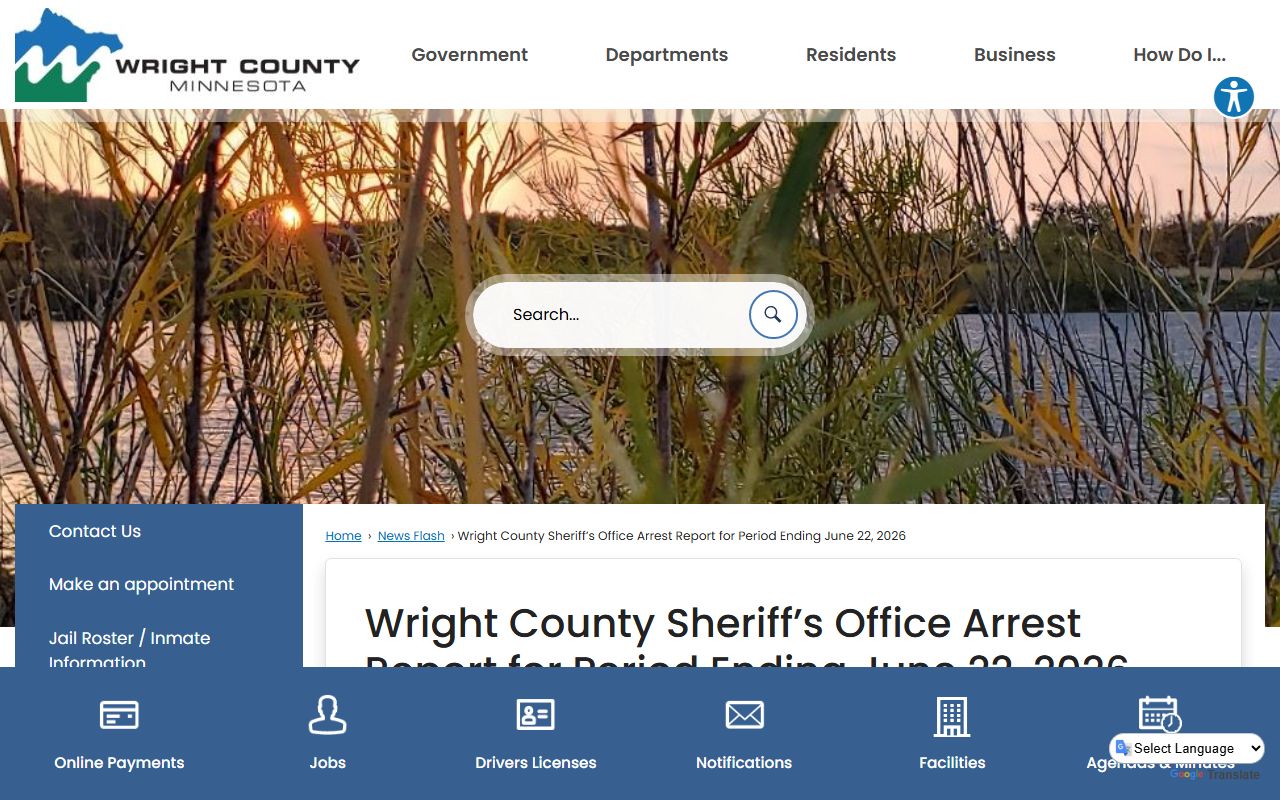
The sheriff’s arrest report is a county news source that can help connect an arrest to the later court charge.
Charge Status and What It Means
Charges do not always stay the same. They can be amended, reduced, added, dropped, or dismissed. Some cases end in a plea. Some go to trial. Some counts are left pending while others are resolved. The court file should be read count by count, because one charge can end differently from another charge in the same case.
| Status | What It Means |
|---|---|
| Pending | The charge is still open and has not reached final outcome. |
| Amended / Reduced | The prosecutor or court changed the charge text or severity. |
| Dismissed | The charge was dropped by the prosecutor or court. |
| Nolle Prosequi | The prosecutor stopped pursuing the charge. |
A Wright County arrest record may be visible long before the court charge reaches final status. The docket is what shows the change. The charge file is what shows the official result.
Source: Wright County weekly arrest report.
The weekly arrest report gives a county-level snapshot that can sit next to the court charge record in a search trail.
Charges vs. Convictions
An arrest record or a charge record does not mean a conviction. A charge is the accusation. A conviction comes later, after a guilty plea or a guilty verdict. The difference matters because a record can show a charge that was later dismissed, amended, or reduced. The charge and the conviction are related, but they are not the same event.
| Charge | Conviction | |
|---|---|---|
| Meaning | Formal accusation filed with the court | Final guilty result or admitted offense |
| Proof Standard | Probable cause | Beyond a reasonable doubt or guilty plea |
| Record Effect | Starts the case | Ends the case on a guilty outcome |
For Wright County, that distinction is especially important in cases that go through hearings, plea talks, or amended charges. The arrest record may stay the same while the case outcome changes.
Sealed vs. Expunged Records
Sealed records are hidden from ordinary public search. Expungement is the Minnesota court process that can seal qualifying records from public view. The two ideas overlap, but they are not identical. Minnesota’s expungement laws set the eligibility rules, and some records cannot be cleared through the normal process. Juvenile and other restricted files follow separate rules.
| Sealed | Expunged | |
|---|---|---|
| Visibility | Hidden from ordinary public search | Sealed after a court process |
| Law Enforcement | Limited access may remain | Limited access may remain |
| Eligibility | Set by court order or statute | Controlled by chapter 609A and related limits |
Source: Minnesota Statutes § 609A.02.
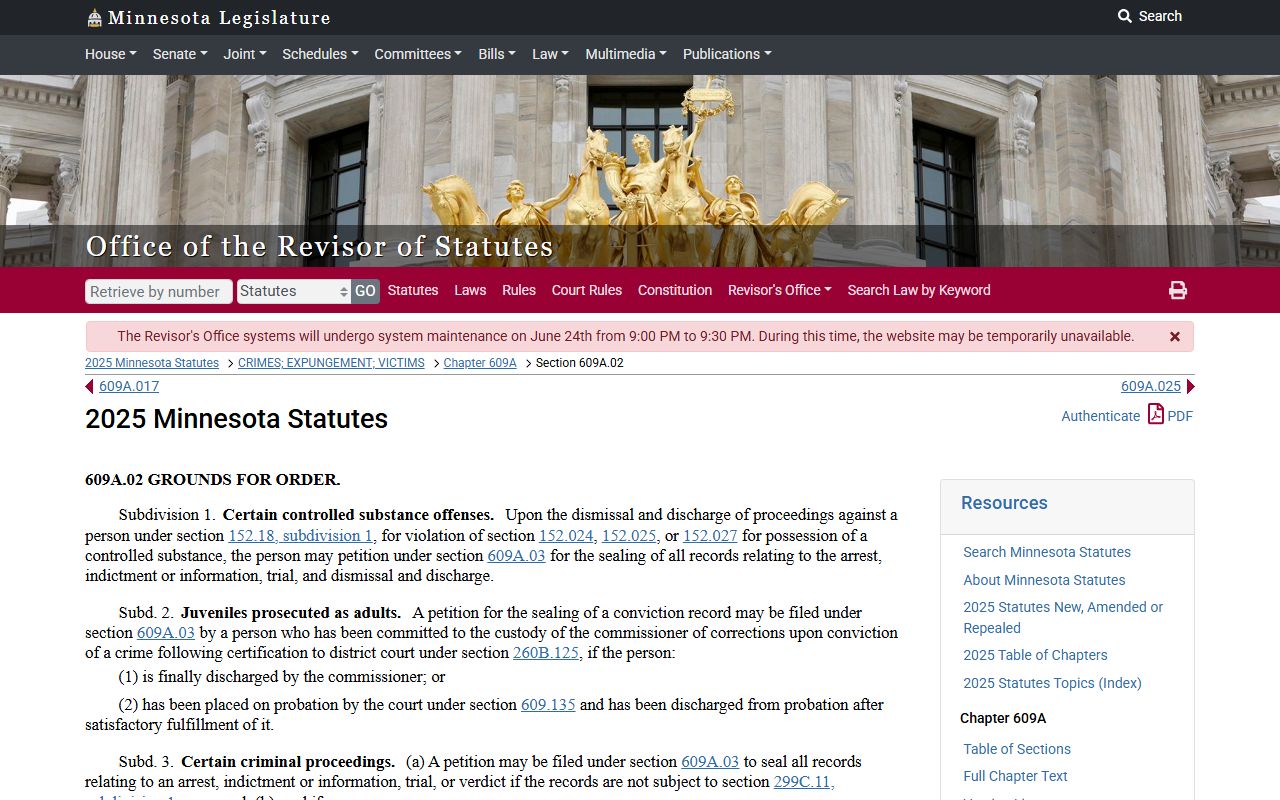
The eligibility statute is the first place to check before treating a Wright County arrest record as expungable.
Source: Minnesota Statutes § 609A.03.
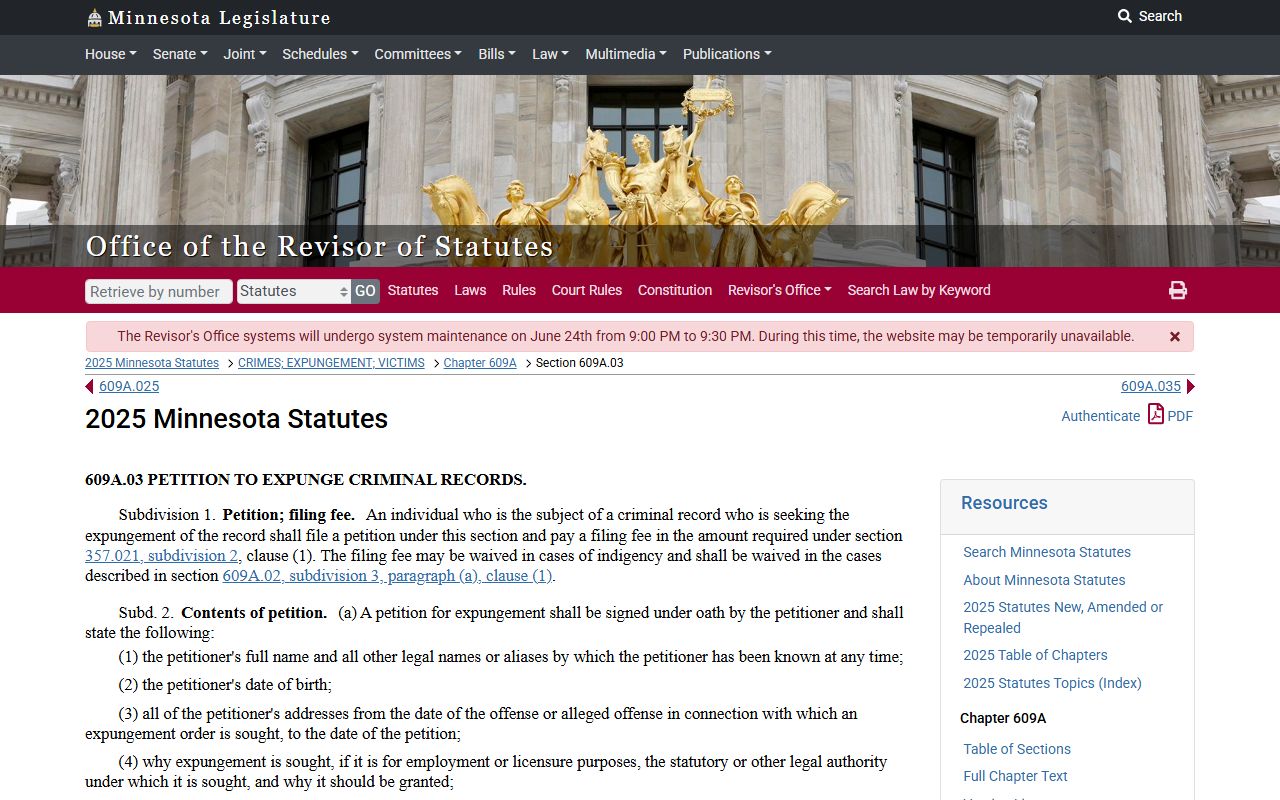
The petition statute shows the filing step that follows if the record qualifies for expungement review.
Statewide Charge and Criminal History Lookups
Wright County arrest records and charges can also be checked against statewide systems. The Minnesota BCA public criminal-history search is the statewide criminal-history lookup. The DOC search tools are separate and focus on people under DOC jurisdiction or fugitive-style search categories. Those systems are not the same as the Wright County court file, but they help confirm whether an arrest, a charge, or a later custody event is showing up somewhere else in public records.
That matters because one search result can be incomplete on its own. A state-level history tool may show a broader picture, while the Wright County court file shows the actual charge case. Together they create the full trail from arrest to disposition.
Background Check Considerations
A Wright County arrest records search is not a consumer background check. Court records, jail records, and state history tools are public records systems with different rules. They are useful for review, but they are not the same thing as an FCRA-regulated screening product. That is the legal line that matters when the record is used for hiring, housing, or insurance decisions.
Important: Wright County Court Records is not a consumer reporting agency and the site cannot be used for credit, tenant, employment, or insurance screening.
Restricted Arrest and Charge Records in Wright County
Some arrest and charge records are limited, sealed, juvenile, or not easy to find in a normal public search. Pending cases can also be harder to read by name than by case number. A missing result does not prove that nothing exists. It can mean the record is restricted, the search needs a different system, or the file is still moving through the court.
For Wright County, the safest next step is the case number and the local office that keeps the file. Court Administration is the best place to confirm whether the case exists, whether the record is public, and whether the court file is the right source for the question at hand.