
What Is a Court Docket in Wright County
A docket is the chronological list of case events. It can show filings, hearings, continuances, motions, orders, and dispositions. In Wright County, the docket is usually the fastest way to see the pace of a case and the next court date. It is not a substitute for the full case file, because the file contains the actual pleadings, exhibits, and orders that the docket only names. A court docket is useful for tracking movement. The case file is what records the substance.
In Minnesota, the district court is the main source for county dockets. Wright County does not have a separate county-court or municipal-court layer for most of these records. That means the public docket trail for local civil, criminal, family, probate, traffic, and juvenile matters is built around district court. Federal matters are different and use federal docket systems, not MCRO. The county page and the daily calendar are the right local points of reference.
Source: Minnesota Government Data Practices Act.
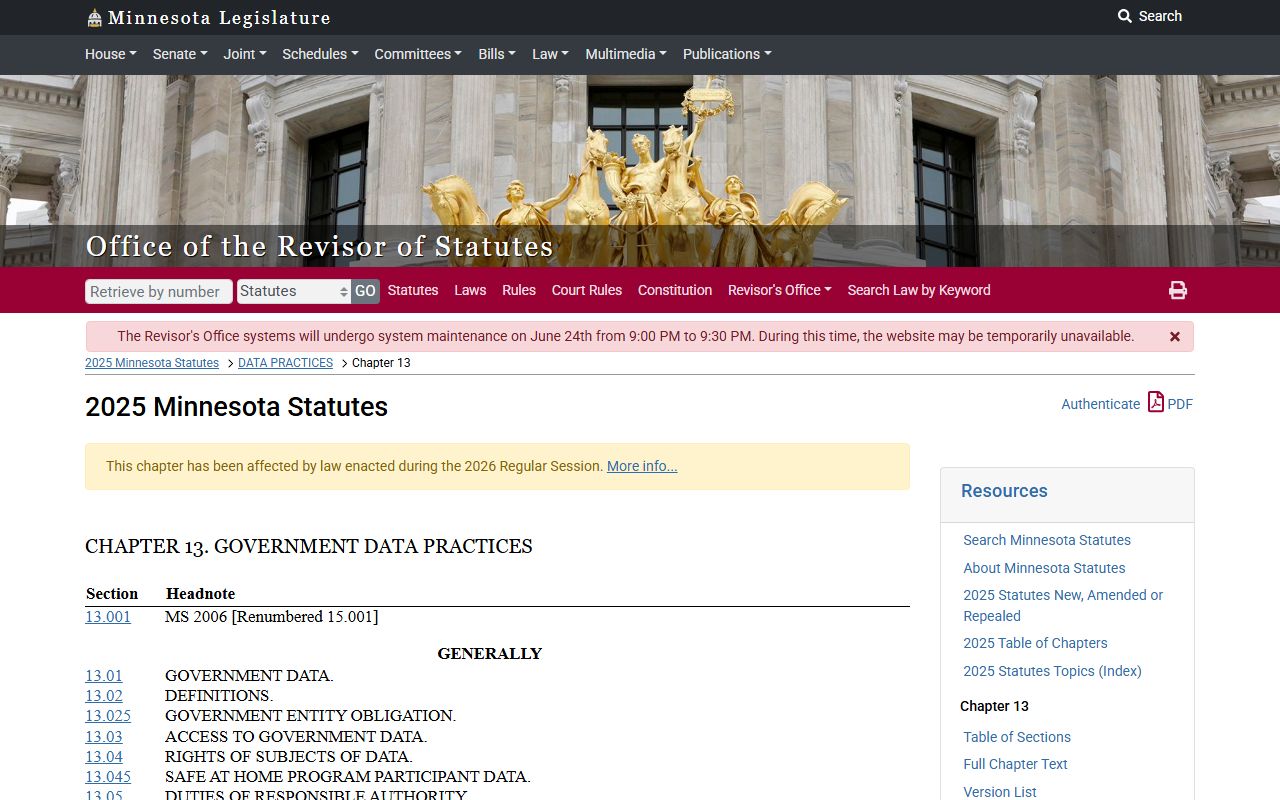
That statute frame helps explain why docket access follows public-data rules but still has limits for some court material.
How to Find Wright County Dockets Online
Start with MCRO Hearing Search at Minnesota Court Records Online hearing search. That tab can search hearings by person, business, case number, judicial officer, attorney name, or attorney bar number. For Wright County, the county daily calendar is the second piece of the search. The calendar is posted at 7:00 a.m. each business day and updated hourly, so it is better for hearing timing than a static case list.
The search path works best when a reader knows the party name or the case number. If the docket is missing, the calendar may still be the best source for the hearing itself. If the matter is confidential or not remotely accessible, Court Administration can confirm whether the record is available at the courthouse or only through a different channel.
- Open MCRO Hearing Search and choose the search tab that matches the known detail.
- Enter the party name, case number, attorney, or judicial officer.
- Use Wright County as the county filter if the search needs to stay local.
- Open the result and read the hearing list, docket events, and case context.
- Check the Wright County daily calendar for the latest courtroom assignment and time.
Source: Wright County daily calendar.
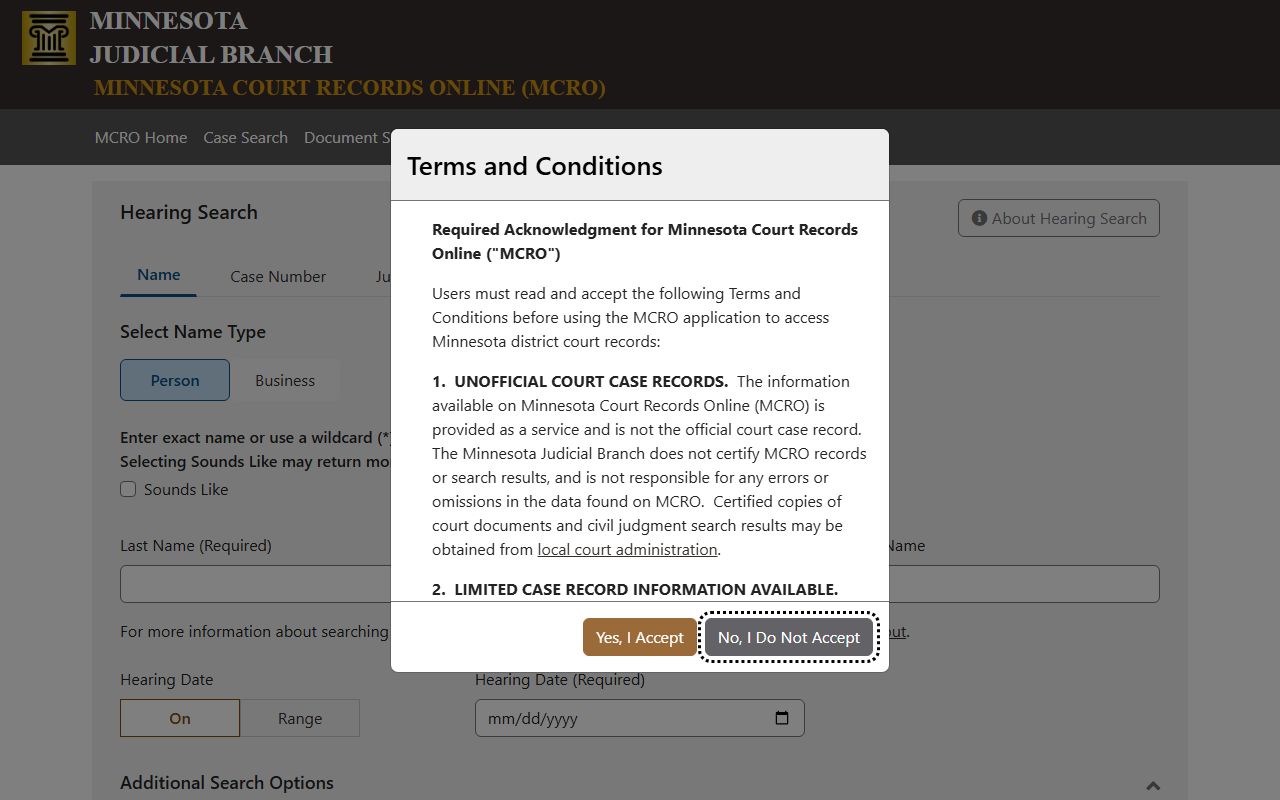
The hearing-search screen is the practical way to get from a name to a docketed court date in Wright County.
Sample Wright County Docket Entry
Wright County’s public calendar shows the kind of information that a docket user is really after. It can show party name, hearing location, hearing date, time, judicial officer, hearing type, connection type, and case number. That is enough to tell a reader when the case is set, which courtroom is involved, and whether the appearance is in person or remote. The docket line does not replace the order or motion behind it. It just points to the event.
| Field | What It Shows |
|---|---|
| Party Name | The person or business tied to the hearing. |
| Hearing Location | The courtroom or remote room assigned to the event. |
| Hearing Date | The scheduled date of the hearing. |
| Time | The scheduled start time. |
| Judicial Officer | The judge or referee assigned to the hearing. |
| Hearing Type | Examples include pre-trial, arraignment, or jury trial. |
| Connection Type | Whether the event is in person or remote. |
| Case Number | The case identifier that ties the hearing back to the file. |
Source: Wright County Court Administration directory.
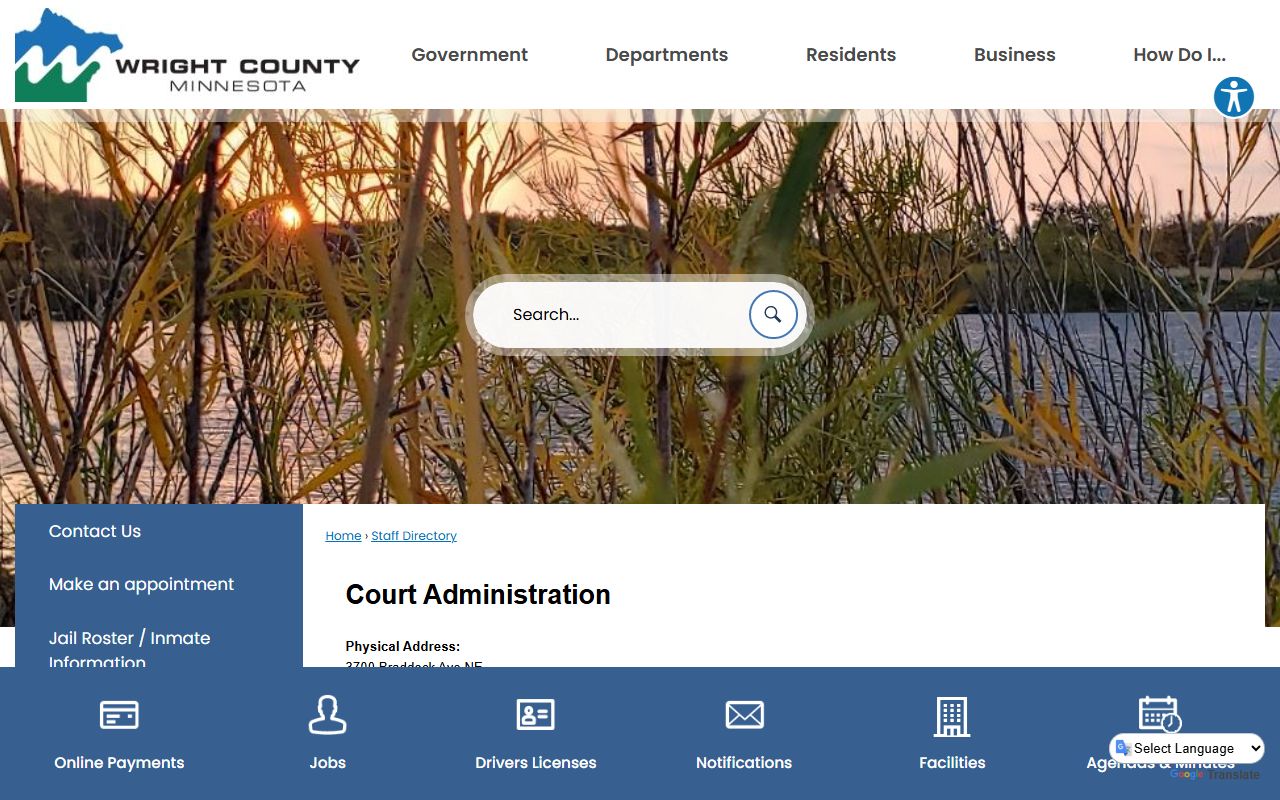
Court Administration is the local place to confirm a docket entry when the calendar or online search leaves a gap.
Courts That Publish Dockets in Wright County
The district court is the main docket source for Wright County. Its hearings and docket trail are the local court record most readers need. Federal cases also have docket systems, but those are separate from the county court search and usually live in PACER or CM/ECF. County agency records, such as sheriff reports, do not replace a court docket. They are different records with a different purpose.
- Wright County District Court. Local hearing calendar, register of actions, and case events for county civil, criminal, family, probate, juvenile, traffic, and conciliation matters.
- U.S. District Court for the District of Minnesota. Federal docket system for federal civil and criminal matters that are not in MCRO.
- U.S. Bankruptcy Court for the District of Minnesota. Federal bankruptcy dockets for bankruptcy cases and proceedings.
Source: Wright County District Court.
Wright County Docket Types
Different case types use the docket in different ways. Criminal dockets track arraignment, plea, motion, sentencing, and probation events. Civil dockets track complaint, answer, motion, order, and judgment activity. Family dockets can show custody, support, and post-judgment review. Probate dockets often focus on filing dates, appointment orders, inventories, and closing papers. The docket line itself is short, but the meaning depends on the case type.
| Case Type | Typical Docket Use |
|---|---|
| Criminal | Hearing dates, plea changes, motions, sentencing, probation, and review hearings. |
| Civil | Filing, response, motion practice, orders, and money judgment events. |
| Family | Custody, support, dissolution, paternity, and post-decree review. |
| Probate | Petitions, appointments, inventories, accountings, and final decrees. |
| Traffic | Citations, hearings, payment status, and disposition events. |
That split helps readers understand why the same docket term can mean something different in a criminal file than in a civil one. A motion in civil court may be about discovery or money. A motion in criminal court may be about suppression, release, or sentencing. The docket is still the event trail, but the case type gives it context.
Docket vs. Full Case Record
The docket is the index trail. The full case record is the full file. A docket can show that a motion was filed or a hearing was set, but the actual motion paper or order may sit behind that line. For public review, that difference matters. A reader may only need the docket to track a case. A lawyer, reporter, or party usually needs the full file too.
| Docket | Full Case Record | |
|---|---|---|
| Format | List of dated events | Documents and case materials |
| Access | Often online and free | May require courthouse review or certified copy request |
| Use | Track progress and hearing dates | Read the filings, orders, and evidence behind the case |
Wright County dockets are also shaped by the public-access rules that limit some online display. A result can be public but partly blank online, especially when the matter is sealed, confidential, or not remotely accessible. The docket tells the reader where to look next. It does not always give the whole answer by itself.
Source: Wright County Court Administration.
How to Read a Wright County Docket
A docket line is usually short on purpose. It may use abbreviations for hearing type, filing type, or case status. A pre-trial hearing is not the same thing as a trial, and an arraignment is not the same thing as a sentencing date. The docket should be read in sequence. That is how the case story becomes clear.
When the docket shows a new hearing, the next question is whether the hearing is on the public calendar and whether the case file has a matching order or notice. If a docket entry looks incomplete, the daily calendar may show the courtroom assignment. If the matter still does not line up, Court Administration is the best local follow-up.
Common docket clues in Wright County include hearing type, connection type, judicial officer, and case number. A remote hearing line tells a different story from an in-person line, and a pretrial line tells a different story from a trial line. That matters because the docket is often the first place a reader sees a change in the pace of the case. One late filing can move a hearing, reset a trial, or push the matter into a new date range.
The register of actions is the same kind of trail in another format. It is not a summary page, because it can show motion dates, orders, continuances, and judgment events. If the docket and the calendar disagree, the local court office can confirm which version is current. That is especially important in criminal and traffic cases, where hearings change fast and a missing line can be the result of timing rather than cancellation.
Source: MCRO Hearing Search.
Wright County Docket Limits
Not every matter is fully visible in the online docket tools. Some records are restricted by court rule, and some matters are only visible at the courthouse. That includes juvenile, protected, and other non-remote record types that Minnesota court-access rules keep out of normal public display. A blank search result does not prove that a hearing never existed. It may only mean the matter is not visible online.
Wright County’s daily calendar helps close that gap, but it does not list every matter handled each day. It is posted in the morning and updated during the day. That makes the calendar useful for live hearing tracking, but not a complete substitute for the docket. The docket tells the story of the case. The calendar tells the reader when and where the next hearing is set.
When a docket question turns into a record question, the local office to call is Wright County Court Administration at 763-760-6300. The office can confirm whether the matter is public, whether a copy is available, and whether the file needs courthouse review instead of online search.